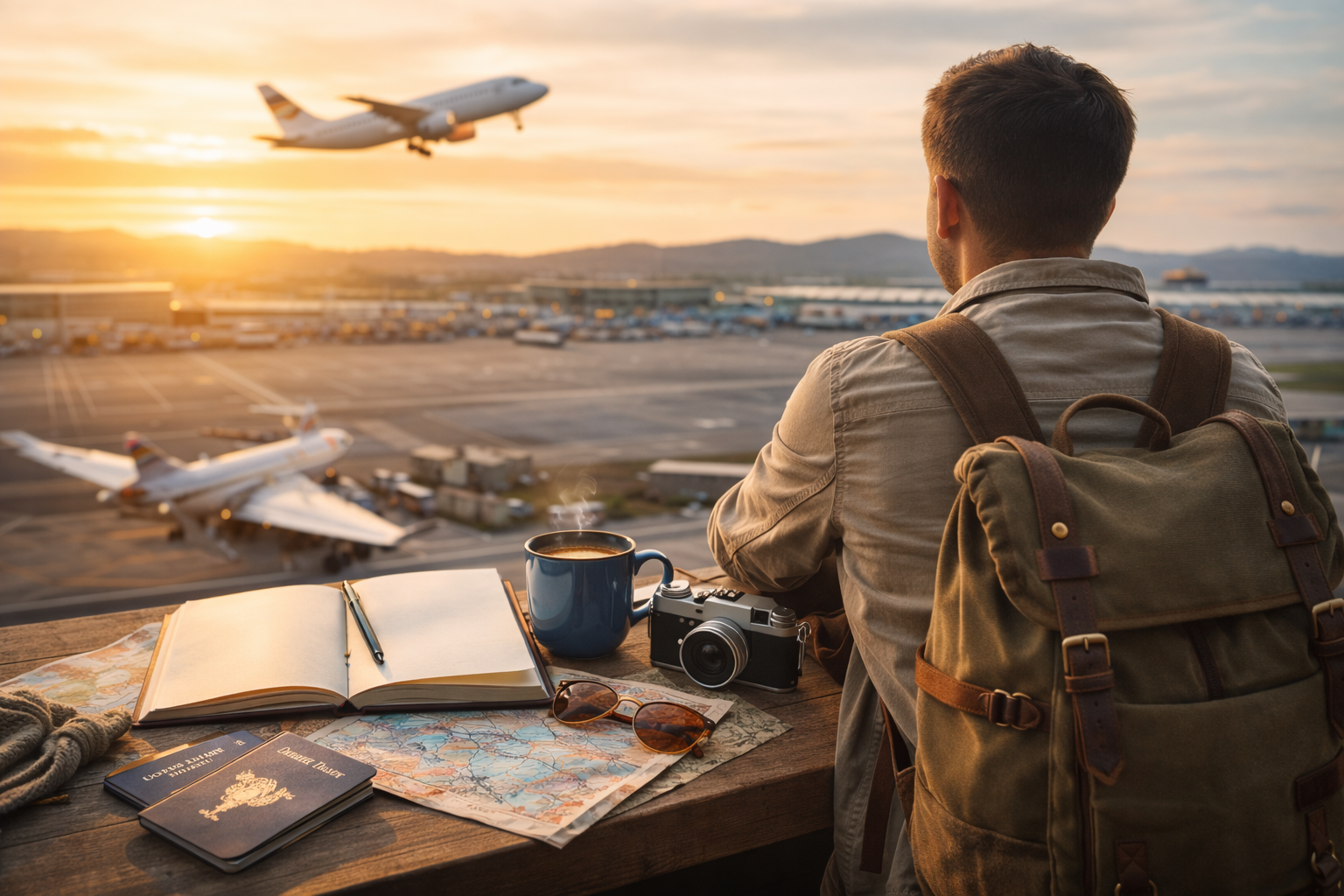
When Travel Becomes a Checklist
For many years, I approached travel with urgency.
Trips were carefully planned. Days were tightly scheduled. There was an underlying belief that seeing more meant experiencing more.
This approach was efficient, but it was also exhausting.
When travel becomes a checklist, it starts to resemble work. Attention shifts from experience to execution. The focus moves from curiosity to completion.
Over time, I began to question whether I was actually absorbing the places I visited or simply passing through them quickly.
The Shift Toward Slower Travel
Slowing down while traveling did not happen all at once.
It started with small choices. Staying an extra hour at a café. Skipping an attraction without replacing it. Walking without a destination.
Those moments felt uncomfortable at first. There was a sense of wasted time. A subtle anxiety that something important was being missed.
But the opposite proved true.
By doing less, I noticed more.
Seeing a Place Instead of Visiting It
When you slow down, places begin to reveal themselves.
You notice patterns. The rhythm of daily life. The way people move through familiar spaces.
You begin to understand a place not as a collection of landmarks, but as an environment. A living system with its own pace and personality.
That understanding does not come from rushing. It comes from lingering.
Redefining What Makes a Trip Meaningful
Slower travel changes how you measure a trip.
Success is no longer defined by how much you saw, but by how connected you felt. Conversations matter more than attractions. Atmosphere matters more than itineraries.
Missed plans become part of the experience rather than interruptions. Detours feel like discoveries rather than mistakes.
There is room for spontaneity. Room for rest. Room for presence.
The Mental Benefits of Moving Slower
Travel often promises escape, but fast-paced travel can recreate the same mental patterns you are trying to leave behind.
Slower travel interrupts that cycle.
Without constant urgency, your attention settles. Stress dissipates. You become more receptive to subtle experiences.
The mind shifts from consumption to observation.
That shift is where perspective emerges.
Bringing the Lesson Home
The value of slower travel does not end when the trip does.
It reshapes how you approach everyday life. It reinforces the idea that presence matters more than volume. That attention matters more than speed.
You begin to look for moments to slow down elsewhere. During meals. Conversations. Daily routines.
Travel becomes not just a change of location, but a reminder of how you want to move through life.
Doing Less and Gaining More
Slowing down does not limit travel. It deepens it.
By releasing the need to see everything, you create space to experience something fully.
And often, that is where the most meaningful memories form.
About the Author
Blake Scherr is a Financial Advisor with Merrill Lynch and lives in Falls Church, Virginia. He enjoys skiing, travel, live music, and cooking. He remains a loyal and frequently conflicted Maryland sports fan.
 blakemscherr
Leave a comment