There was a time when travel meant rest.
Airport lounge. Book in hand. A drink before boarding. A hotel room that felt like an exhale. Vacations were about quiet. About slowing down. About escape.
Then I became a father.
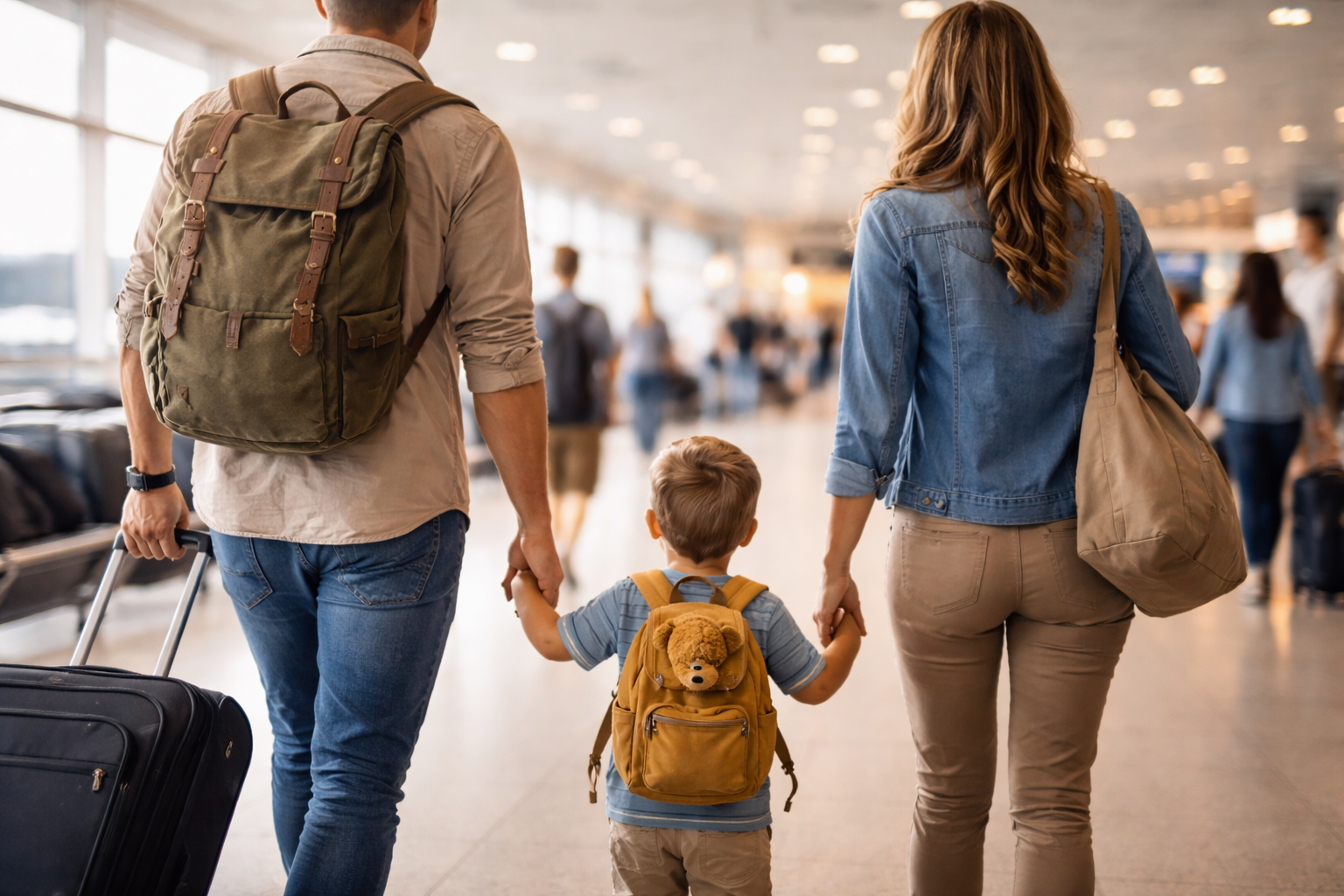
Now when I travel with my family from Falls Church, Virginia, the word “vacation” feels almost ironic. There are more bags than adults. Snacks packed with military precision. Diapers. Backup outfits. Emergency wipes. A stroller that somehow never folds as easily as the YouTube video promised.
Family trips are not relaxing.
And that’s exactly why they matter.
The Myth of Relaxation
Somewhere along the way, we were sold the idea that travel is supposed to restore us through stillness.
Sleep in. Lounge by the water. Move slowly. Do less.
But when you travel with children, especially toddlers, stillness disappears. Mornings begin early. Naps are negotiated like diplomatic treaties. Meals are events. Bedtime routines must be recreated in unfamiliar rooms that feel nothing like home.
You are more alert, not less.
You are more responsible, not less.
You are tired in a different way.
At first, that felt like failure. Wasn’t the point of leaving town to relax?
But that assumes relaxation is the goal.
For families, it is not.
Chaos With Meaning
Family travel is structured chaos.
It is packing the car and realizing you forgot something essential. It is unloading everything just to repack it differently. It is setting up a pack and play in a room that suddenly feels too small.
But it is also watching your child see something for the first time.
The ocean.
A mountain.
A plane taking off.
Hotel lobby chandeliers that might as well be magic.
When I travel with my son Max, I am not resting. I am observing.
I watch him process new environments. I watch curiosity stretch him. I watch how quickly children adapt when adults hesitate.
There is exhaustion in it.
But there is also expansion.
And expansion is rarely comfortable.
Travel as Compression of Time
Before becoming a father, trips blended together.
Now they feel monumental.
A weekend away feels like a chapter. A few days carry weight. Because when you have a child, you measure time differently. You are aware, sometimes painfully, that it is moving quickly.
Family trips compress memory.
Three days can hold:
Firsts.
Laughter that feels unrepeatable.
Moments of frustration that become stories by dinner.
A photo that you know, instinctively, you will look at in ten years.
When you travel alone, you remember places.
When you travel with your family, you remember growth.
That is a different kind of return on investment.
You Don’t Escape Your Life. You See It More Clearly.
Travel used to feel like escape.
Now it feels like contrast.
When I leave Falls Church with my family, I do not step away from my life. I bring it with me. The responsibilities. The rhythms. The love. The chaos.
But I see them differently.
In a hotel room at night, when everything is finally quiet, you notice the small details. The way your child breathes. The way your spouse carries more than you realized. The way your own patience is thinner than you hoped.
Travel removes the autopilot.
At home, routines hide things. On the road, everything is exposed.
That is not relaxing.
It is clarifying.
The Work Is the Point
Family trips are effort.
They require planning. Energy. Flexibility. Emotional regulation.
You will not always sit by the pool uninterrupted. You will not always finish the book you packed. You may not even eat a full meal while it is still warm.
But you will build something.
Shared reference points.
Inside jokes.
Tiny traditions that repeat every summer.
Stories that begin with, “Remember when…”
The work is the memory.
The logistics are the scaffolding for connection.
And connection rarely comes from comfort. It comes from shared experience.
Redefining Rest
There is a deeper kind of rest than physical relaxation.
It is the rest that comes from alignment.
From knowing that you are investing time where it matters most.
When I come back from a family trip, I am often physically tired. But emotionally steady.
Because I know I showed up.
I was present for the meltdowns and the magic. I carried the bags. I held the hands. I sat on the edge of the bed during bedtime in a place that felt foreign and made it feel safe.
That is not spa level relaxation.
But it is grounding.
And grounding is a different kind of restoration.
Why That’s the Point
Family trips are not designed for efficiency.
They are not optimized for maximum rest per hour.
They are intentionally inefficient.
Because children do not remember how rested you were.
They remember how present you were.
They remember the beach towel wrapped around them when they were cold. The walk to get ice cream. The way you pointed out airplanes in the sky.
Years from now, Max will not remember whether I answered emails on a trip. He will remember whether I played in the sand.
That perspective changes how you define success.
The point is not relaxation.
The point is memory.
The point is connection.
The point is teaching your children, through experience, that the world is bigger than their backyard.
The Unexpected Return
Family travel teaches patience.
It teaches adaptability.
It teaches humility when your carefully planned schedule collapses.
It teaches gratitude for home.
And maybe most importantly, it teaches you that joy is rarely quiet.
It is loud. It is messy. It requires effort.
But it compounds.
In a world that often pushes productivity, optimization, and comfort, family trips push something else: presence.
And presence is never passive.
Final Thought
If you are waiting for the season of life when travel becomes easy again, it will come.
There will be quieter trips. Slower mornings. Independent kids.
But this chapter, the loud and chaotic one, will not repeat.
So if your next family trip leaves you tired, a little disheveled, and slightly overstimulated, that may be the sign you did it right.
It was not meant to relax you.
It was meant to shape you.
And shape your family.
About the Author
Blake Scherr is a Financial Advisor with Merrill Lynch. He lives in Falls Church, VA. He enjoys skiing, travel, live music, cooking, and is a tormented Maryland sports fan.
 blakemscherr